
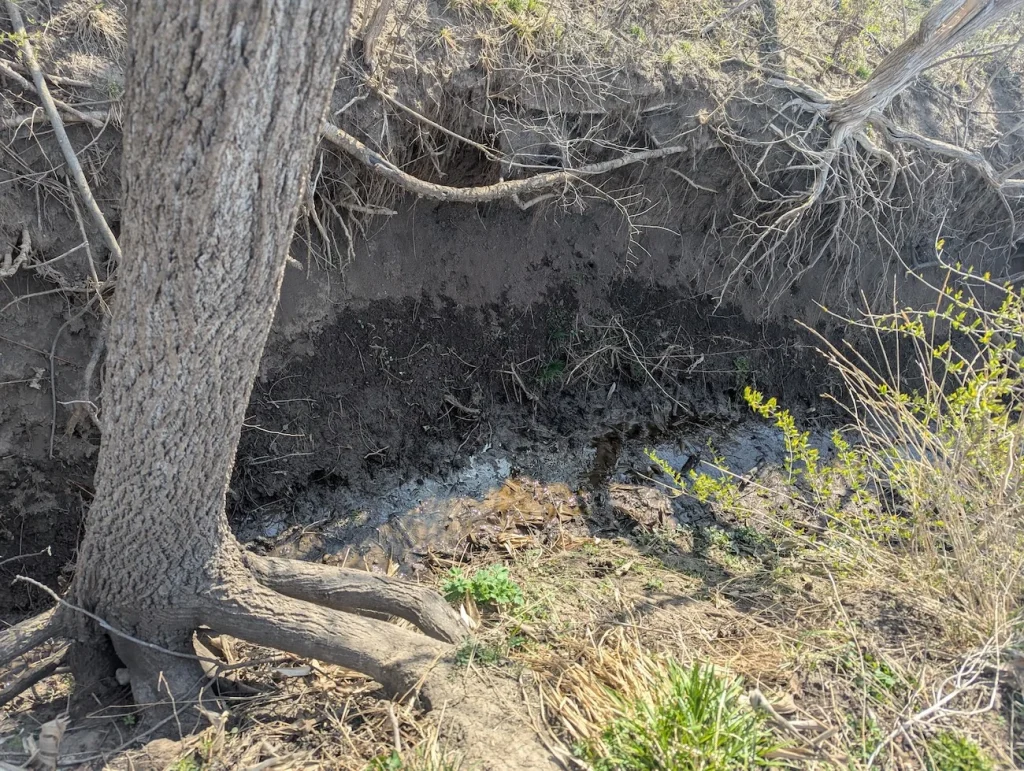
Stream Buffers
Stream buffers are vegetated areas adjacent to waterways that help filter runoff, trap sediment, and reduce phosphorus and nitrogen before they enter streams and rivers. These buffers also stabilize streambanks, prevent erosion, and provide habitat for wildlife.
Also known as riparian buffer strips or filter strips, stream buffers are established by removing land from agricultural production and planting a mix of grasses, shrubs, and trees. Their effectiveness depends on proper soil erosion control in the surrounding land. While uniform buffers are common, varying the buffer width based on runoff volume can enhance their impact.
Stream buffers play a key role in improving water quality and can be integrated with other conservation practices. Financial and technical assistance is available to help landowners establish and maintain buffers through USDA and state programs.
